
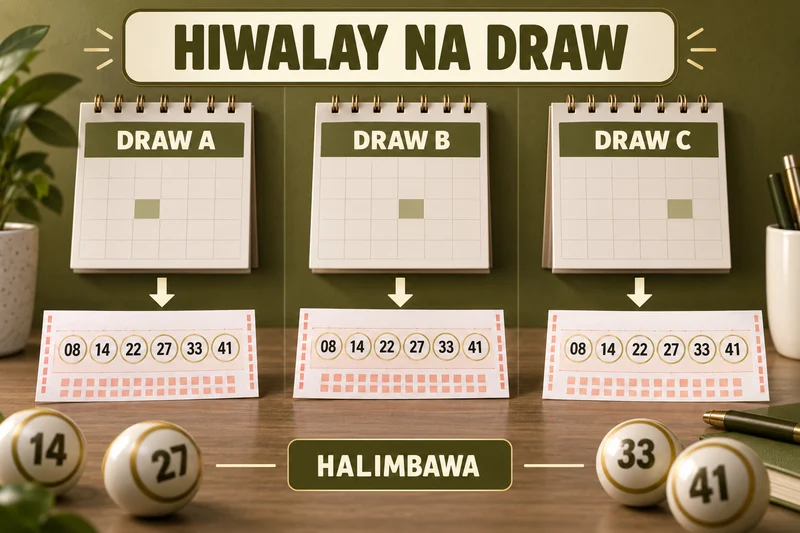
The same number across multiple draws: which probability are you measuring?
Multiple lines in one draw and the same line in multiple draws are different. Initially, distinct sets were counted in a single event. In the second, the number of times the event is repeated is counted. The formula is different and requires a clear independence assumption.

A small model to understand
First use a fictitious fair model of 100 outcomes, so there is a 1% chance of a selection per draw. Each event is assumed to be independent. The probability of at least one hit in k draws is 1 − (1 − p)k; it’s not simple k×p when there are many events.
Account not exceeding 100%
| Independent draws | At least one hit, p=1% | No hits |
|---|---|---|
| 1 | 1.00% | 99.00% |
| 10 | 9.56% | 90.44% |
| 100 | 63.40% | 36.60% |
What can’t be brought to the actual lottery?
The same number selection is not enough to say that a product is independent. The formula has assumptions; the current accepted ticket format and draw identity are required by actual game documentation. The PCSO archive are dated records, not proof from a short sample of complete independence or fairness.
Additional events, additional costs
If there is a charge for each event, that needs to be totaled in a separate ledger. The hit is not guaranteed because the draw count is high. In the 100-event toy model, there is still about a 36.60% no-hit probability. The hit probability also says nothing about the monetary prize or net profit.
Related reading
For other formats, read bingo and lottery hub. Naa library of guides the topics are more detailed; the arionplay has a general overview of the site.
Methodology: documentary reading and own example or calculation. Sources checked 6 October 2026; no ticket purchased or draw played for the guide. Hypothetical models are not live results, predictions or claim approvals.